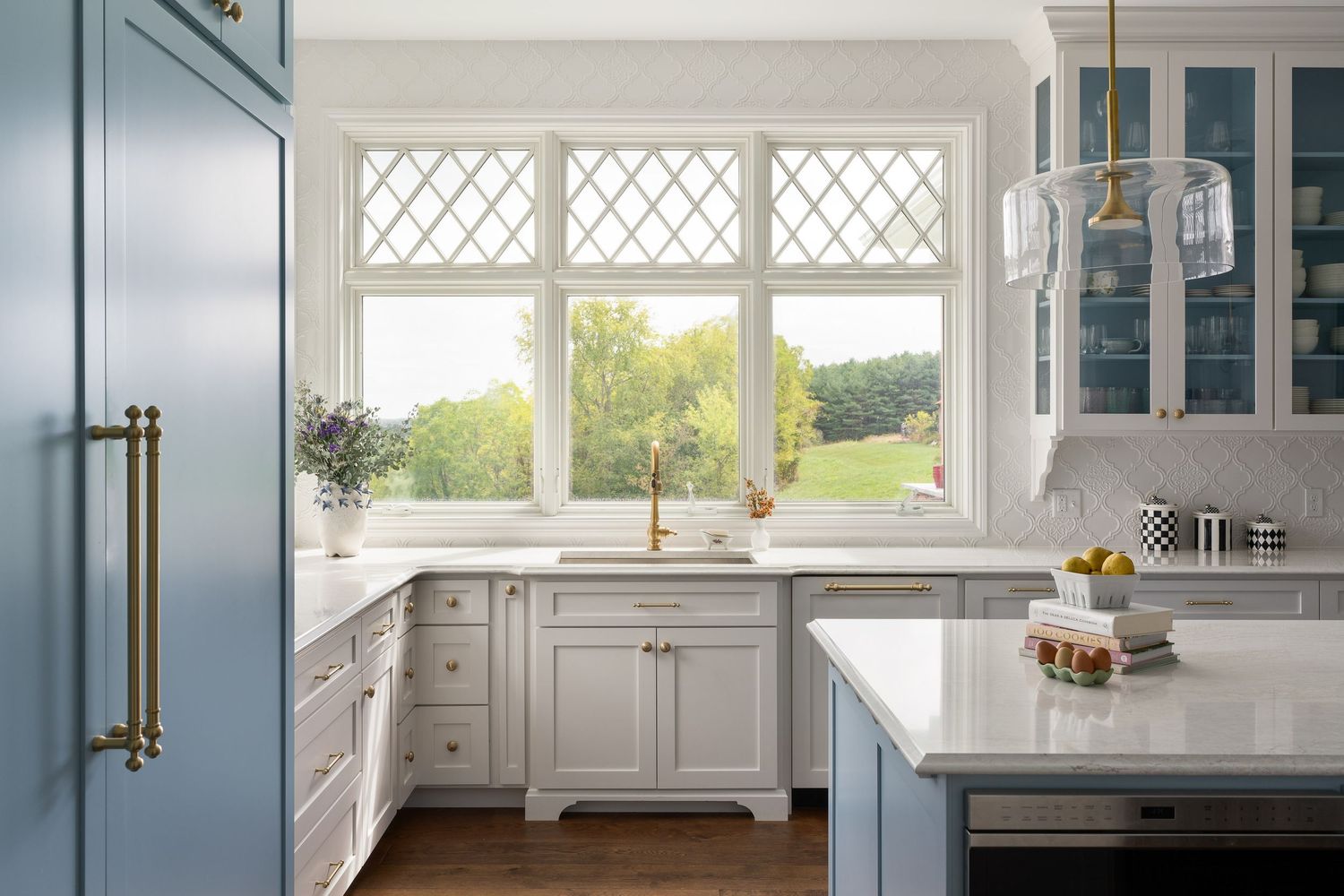
Do you want your project photographed by someone who is watching the clock, or someone who is watching the light?
You’ve spent months perfecting your interior design or preparing your real estate listing, but is your photography reflecting that vision or distorting it? In a visually-driven industry, your portfolio is often a client’s first impression. Unfortunately, many professionals rely on HDR (High Dynamic Range), a software-driven shortcut that frequently undermines interiors. Your brand deserves better than a digital compromise.
Marketed as a "see-it-all" solution, HDR is actually a digital compromise. By smashing multiple exposures together, it creates a synthetic, "muddy" aesthetic that flattens contrast and strips away the natural depth of a space. The result? Vibrant blues turn dull, rich wood grains disappear, and your meticulously chosen palette is replaced by inaccurate color casts.
This isn't just about aesthetics; it’s about brand integrity and accuracy. HDR is built for speed and volume, favored by "camera operators" who prioritize quantity over quality. Interiors demand a meticulously crafted depiction, not just a quick capture, that honors your original intent through the professional use of light.
Why HDR Misses the Mark
The biggest challenge in interiors is mixed lighting: cool blue light from windows clashing with warm orange light from lamps. (Shooting with the lights off is preferred, but that's another topic). HDR processing attempts to "average" competing temperatures, leaving you with yellow walls, glowing blue floors, and oversaturated grass outside. When colors are averaged, your carefully chosen design details are the first things sacrificed.
My Professional Alternative
By using supplemental strobes, I overpower these clashing light sources with a clean, neutral base. This ensures:
- Color Integrity: Your "greige" paint stays greige, not a muddy yellow.
- Textile Accuracy: Fabrics maintain their true hue and saturation.
- Natural Views: Windows remain crisp, free from the blue HDR haze.
Beyond the "Mud": Restoring Depth and Texture
HDR is designed to eliminate shadows by brightening every corner of a room. This is often inaccurate and misleading. By flattening the image, HDR creates a "muddy" look where $20,000 marble looks like gray plastic and millwork loses its dimension. Without natural shadows, a room loses its 3D shape and soul.
Shadows aren't the enemy; they define the architecture.
My Craft Difference
By intentionally placing strobes, I can sculpt the light to:
- Define Dimension: Retain the soft shadows that give a room its scale.
- Highlight Texture: Bring out the wood grain and the weave of fine fabrics.
- Create a "Hero" Shot: Produce an image you can feel, not just see.
The "Volume" Trap: Quality vs. Quantity
Many photographers hype HDR for one reason: speed. Companies offering HDR photography in Ohio often hire "camera operators" to snap brackets in 20 minutes before rushing to the next appointment. The goal is volume, relying on editors or AI to "fix" the images later. This is especially prevalent in real estate listings, but also seen in interior design, apartment models, and remodeling projects.
In contrast, a professional using supplemental light doesn't just "take" a photo; we build one. While an HDR technician is watching the clock, a professional photographer is watching the light, adjusting strobes, and refining the composition to honor your hard work and the accuracy of the space.
- HDR is a commodity: Focused on how many projects can be shot in a day.
- Lit photography is an investment: Focused on the quality of your brand and the accuracy of your project or real estate listing.
Your Portfolio is Your Legacy
From a modest real estate listing to a high-end design project, your portfolio photos are the most powerful marketing tool. Using HDR is like using a microwave to cook a gourmet meal; the result might be "done," but the soul is missing.
To truly represent your craftsmanship, you need photography that values accuracy over automation. Choose the craft of light and let your designs speak for themselves.
How to Vet Your Next Photographer
Before you hire a photographer for your next project, ask these five questions to ensure they are providing a professional, light-crafted service rather than a quick HDR "capture."
- "Do you use supplemental lighting or 'natural light' only?"
- What to look for: If they say "natural light only" or "bracketed HDR," they aren't controlling the color or shadows. Look for someone who mentions strobes, flashes, or "flambient" (flash/ambient) techniques.
- "Do you use a flash on your camera or off-camera?"
- What to look for: If they say "on-camera flash," they aren't controlling the direction of light because they are blasting a flash from the position of the camera every time, which is not a natural direction of light in a room. Some HDR camera operators add one flash blast from the camera, making the foreground overly bright and the background unnaturally dark.
- "How much time do you spend per house/room/composition?"
- What to look for: If they claim they can shoot a 4,000 sq. ft. house in 30-45 minutes, they are shooting for volume. Speed is not a flex; it shows their priorities of moving on to the next one, not crafting an image. A professional with lighting can take 2 hours for the same-sized space.
- "How do you handle mixed light temperatures (lamps vs. windows)?"
- What to look for: If their answer is "the editor fixes it," be wary. A professional photographer will explain how they use light to neutralize color casts on-site. Images still require editing, but accuracy in-camera is key.
- "Can I see a 'before and after' of your lighting process?"
- What to look for: A photographer proud of their craft will be happy to show or demonstrate how they built an image with the best elements from a lit image and ambient light.
Want to know more about using lights in interior design or real estate photography? Let's connect and chat about your next project.