Every Second Counts
If you watched Season 2 of the FX Network's hit show The Bear, there is a quiet, pivotal moment that likely stuck with you. It certainly stuck with me.
It’s in E7, a scene where Ritchie, currently feeling purposeless and sent to stage at a high-end restaurant, is stuck doing the menial tasks like polishing the forks. He’s frustrated. He thinks it’s busywork, but starts to realize the importance of the little tasks.
Then, Chef Terry (played brilliantly by Olivia Colman) is seen early in the morning peeling mushrooms for a dish to be served that night. She explains that they don't just wash the mushrooms; they peel them to let diners know they spent time on their dish. Why? Because it shows standards and respect. It is a tiny, unseen step that 99% of people would never consciously notice. But if they didn’t do it, the result would be just a little less special.
That scene perfectly articulated something I have spent my career trying to define in my own work as a photographer. Photography often looks instantaneous. In the age of smartphones, we are used to "point, shoot, share." But professional photography, the kind that truly honors a space and serves a client, is a slower process filled with invisible labor and decisions.
Every profession has its version of "peeling the mushrooms." It's the tedious, unglamorous preparation that happens before the curtain goes up. In my world, nobody sees me carefully setting up supplemental lighting to gently craft a scene. It would be faster to just bracket exposures for HDR and let some software merge them later. But supplemental light allows me to shape the mood, highlight textures, and create depth that feels authentic to the human eye. It takes time to set up, but the quality is undeniable.
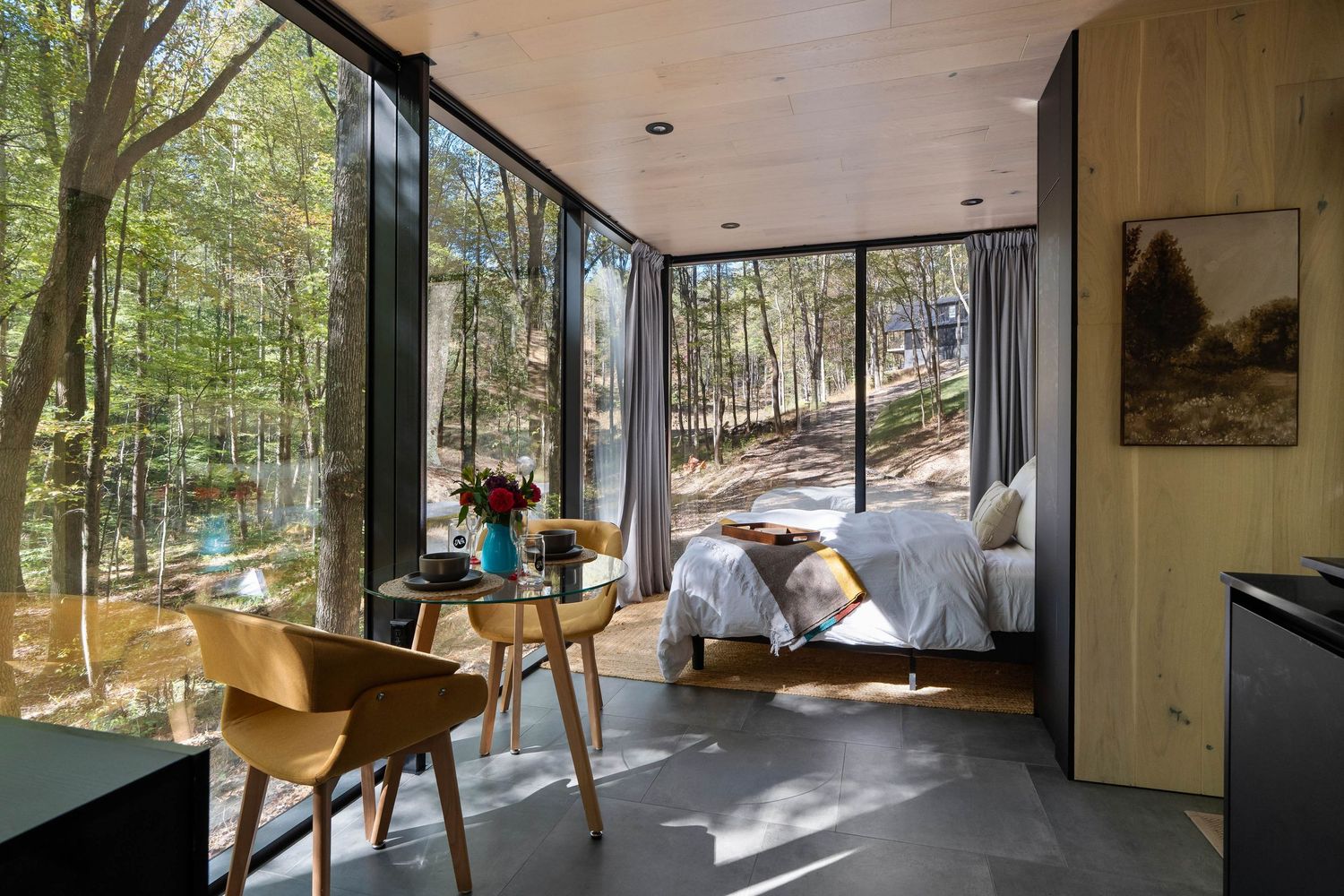
Nobody sees me walking through a room before the camera even comes out, straightening curtains, adjusting pillows so they sit just right, aligning chairs to a table, or styling small items on a shelf. I do this because I know a home is usually someone's single biggest investment. The people I work for, interior designers, architects, and STR (Short Term Rental) owners, have poured their sweat and souls into these projects.
I treat every single house and project with the same level of importance because I need to honor their hard work. Taking a few minutes to smooth a duvet cover is my way of showing respect for the effort it took to build the bedroom.
The "mushrooms" are in the gear choices, too. It’s easier to slap on an ultra-wide-angle lens and capture an entire room in one shot. But I deliberately use zoom lenses. This forces me to slow down, compose carefully, and capture spaces with accuracy and minimal distortion. I want the photos to look like reality, not like a funhouse mirror.
The effort continues in how I prepare for a project. It’s watching the weather forecast and proactively reaching out to a client to squeeze in exterior shots on a beautiful afternoon right before a scheduled storm rolls in.
I photograph with intention to reduce decision fatigue for my clients later. Instead of dumping 100 mediocre images on a client and forcing them to do the work of choosing, I provide a curated, logical sequence of the best images.
When a client looks at a final photograph, they will likely never know that I moved a lamp three inches to the left to avoid a reflection, or that I waited ten minutes for a cloud to pass to get the perfect light on the front elevation. They won't know I spent time straightening the fringe on a rug, hid a cord, or aligned the cushions.
A client may never know the time spent, but they will look at the image and feel that the space looks inviting, accurate, and high-quality. My hope is that they will feel that their project was treated with care.
It’s about the integrity of knowing you did everything possible to provide the best service, even when no one was watching.